

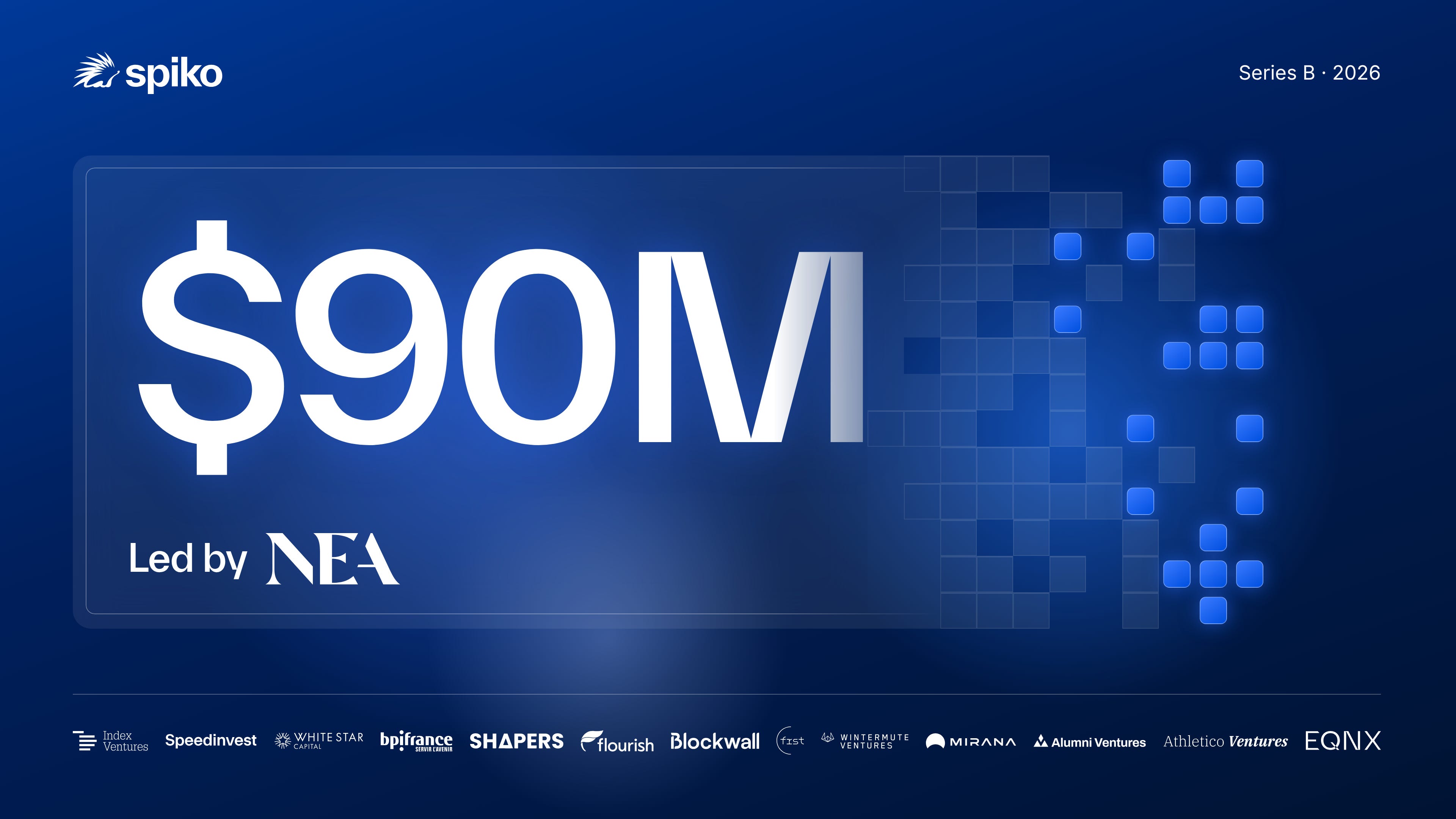
Spiko has announced a $90 million Series B led by NEA. We participated alongside Index Ventures and other existing and new investors. The funding will support Spiko’s new products, expansion across Europe and a growing team.
We backed Spiko at the pre-seed stage, while the team was building the technical and regulatory foundations for its first funds, and have participated in every funding round since.
Why cash came first
Our original thesis was that regulated financial instruments could become more accessible and useful on blockchain infrastructure. The early cash-management opportunity was particularly clear for stablecoin holders: traditional money market funds offered access to short-term government debt, but were difficult to use within the systems where those investors already held their money.
As our Partner Damien Roch wrote in our original Spiko investment article, the company could become the “connective tissue between traditional finance and DeFi.” Cash products were the starting point for a broader ambition to improve how securities are issued, held and transferred.
The customer problem extended well beyond crypto. Large institutions had long used money market funds to manage their liquidity. Smaller businesses faced high minimum allocations, cumbersome processes and products designed around larger clients. A company with cash set aside for payroll or suppliers still needed that money available, even if it would not be spent for several weeks.
Spiko chose to start with this everyday need. Its first euro and dollar funds launched in June 2024, giving businesses and individuals access to Treasury-bill investments through their app. The first products combined a return on cash with daily redemption access.
The team to build it
The regulatory work was central to our investment decision. Putting a fund on a blockchain still requires a legal structure, custody, approvals and an operating process that customers can trust.
Before starting Spiko, Paul-Adrien Hyppolite worked on financial-market regulation at the French Treasury. Antoine Michon had deployed software at Palantir before advising the French government on digital transformation. Their previous work mattered for a company that had to secure approvals and build the software for fund ownership, customer access and distribution.
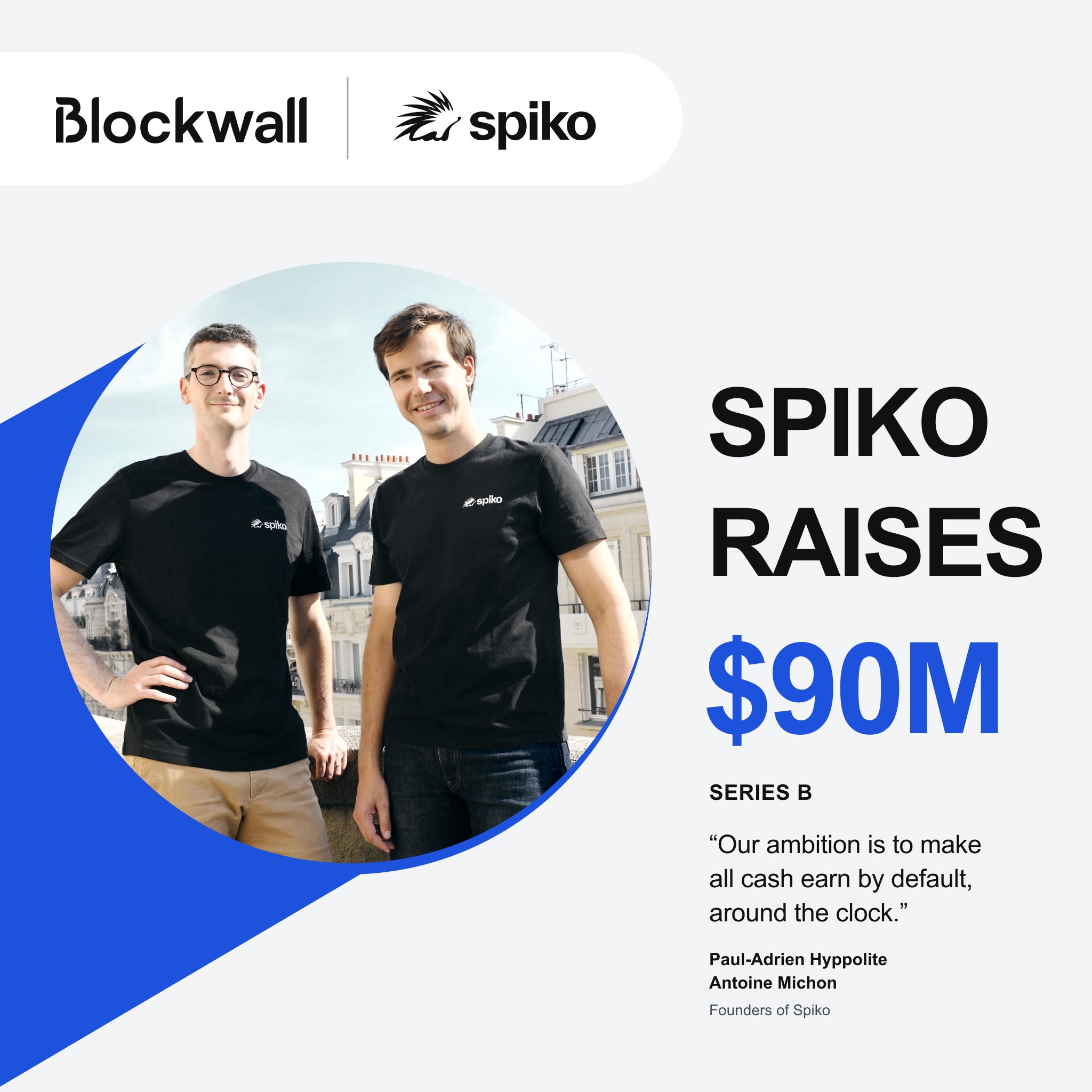
Paul-Adrien described in his Series A reflection how he and Antoine left public service, explored different fintech ideas and began to assemble the team, product and partners in summer 2023. The first product took a year to build and get approved.
“That’s the reality of fintech, which is sometimes overlooked. Building a product is one thing; getting it approved is another.”
What the token changes
The return comes from the fund’s investments. Tokenization changes how investors own and use the shares.
Spiko records fund ownership on a public blockchain. In his Founder Spotlight at our Investor Summit, Paul-Adrien explained the practical consequences: visibility into the share register and investor concentration, fewer intermediaries in administering ownership, and transfers that can run around the clock between approved holders.
He also outlined an application for corporate groups: treasury teams could pool liquidity by transferring money market fund shares across the organisation, provided each recipient is authorised. Ownership would move while the capital remained invested and continued earning a return, avoiding a redemption and a fresh subscription when reallocating investments between companies in the group.
A fund share can also become useful in another financial transaction. During the same presentation, he demonstrated borrowing stablecoins against tokenized fund shares. This provides a route to liquidity without first redeeming the shares, subject to available lending liquidity and collateral requirements. It is a different process from withdrawing cash from the fund.
For an ordinary treasury user, much of the infrastructure can stay in the background. Money goes in through a familiar interface, the customer holds shares in a regulated fund, and withdrawal timing follows the relevant product and payment route. The important change is that the same ownership infrastructure can serve an app, a bank or another financial platform.
Demand, then distribution
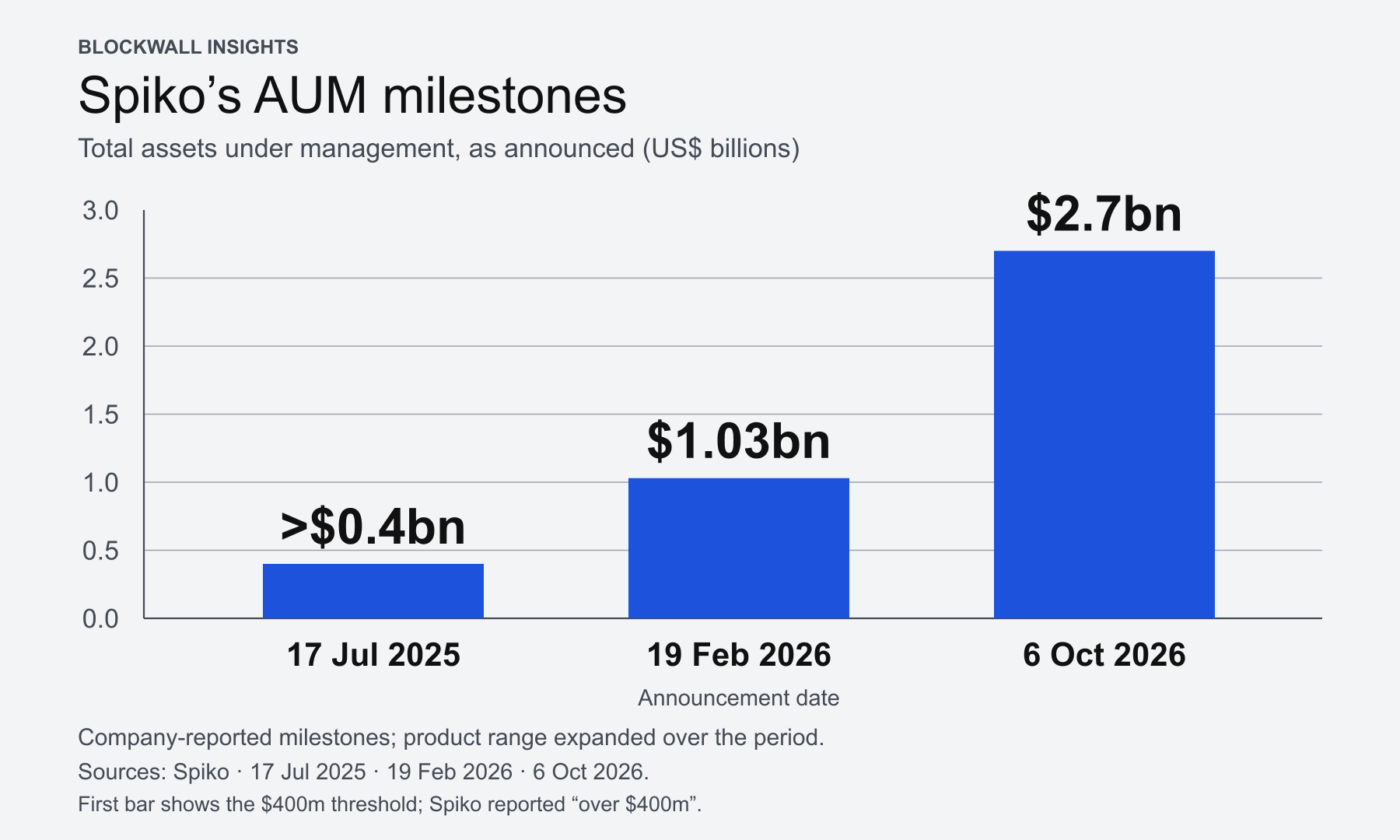
By July 2025, Spiko reported more than $400 million in assets under management, achieved in its first year with 9 people on the team. In February 2026, it passed $1 billion in AUM for the first time.
At today’s Series B announcement, Spiko reported $2.7 billion invested across its funds. More than 10,000 businesses and individuals use the platform across over 25 jurisdictions, directly or through platforms that integrate Spiko. The range now includes Smart Cash, launched with Amundi as the Spiko Amundi Overnight Swap Fund (SAFO) in March 2026, alongside the original Treasury-bill funds.
Spiko’s SAFO reached nearly $400 million in AUM within three weeks of launch, becoming the world’s fastest-growing tokenized fund and getting off to a stronger start than BlackRock’s BUIDL, which is tokenized by Securitize.
Distribution helps explain the next stage of growth. When Memo Bank integrated Spiko in 2025, customers could subscribe to and redeem funds from their existing banking workspace. Within two weeks, they had allocated more than €35 million.
That is a concrete advantage of building an API alongside the customer app: other financial businesses can offer the funds where their customers already manage their money.
What comes next
The Series B will fund new products and local teams across Europe, including Germany, Italy, Spain, the Netherlands and the Nordics. Spiko already operates from London and Paris.
The product ambition now extends to cash that can be managed continuously through software. Spiko’s original T-Bill funds now accept deposits and withdrawals in EURC and USDC. Hourly interest accrual remains a planned next step, alongside a vision of treasury rules that move cash automatically as payment needs change.
For us, the broader tokenization case follows from these uses: regulated assets that can be distributed through existing financial platforms, transferred between approved owners and connected to payments or collateral markets.
Paul-Adrien made a related point in our capital-markets panel: broad adoption depends on removing the technical complexity from the customer experience.
Cash remains a good place to start. The next step is to make it work across the tools businesses already use, whether a person or a piece of software gives the instruction.

Thanks for reading Blockwall Insights! Subscribe for free to receive new posts and support our work.
Disclaimer
To avoid any misinterpretation, nothing in this blog should be considered as an offer to sell or a solicitation of interest to purchase any securities advised by Blockwall, its affiliates or its representatives. Under no circumstances should anything herein be interpreted as fund marketing materials for prospective investors considering an investment in any Blockwall fund. None of the data and information constitutes general or personalized investment advice and only represents the personal opinion of the author. The author and/or Blockwall may directly or indirectly be exposed to the mentioned assets/investments. For further information please view the full Disclaimer by clicking the button below.
This work is licensed under the Creative Commons Attribution – No Derivatives 4.0 International License. CC BY-ND 4.0 Legal Code | Creative Commons